In the upper echelons of watch collecting, a reference is defined as much by its history as its mechanical complexity. Provenance transforms an exceptional object into an indisputable historical record, establishing absolute authenticity and pedigree. Discerning collectors treat documentation as an essential pillar when building an investment-grade portfolio.
The Value of Original Papers and Boxes
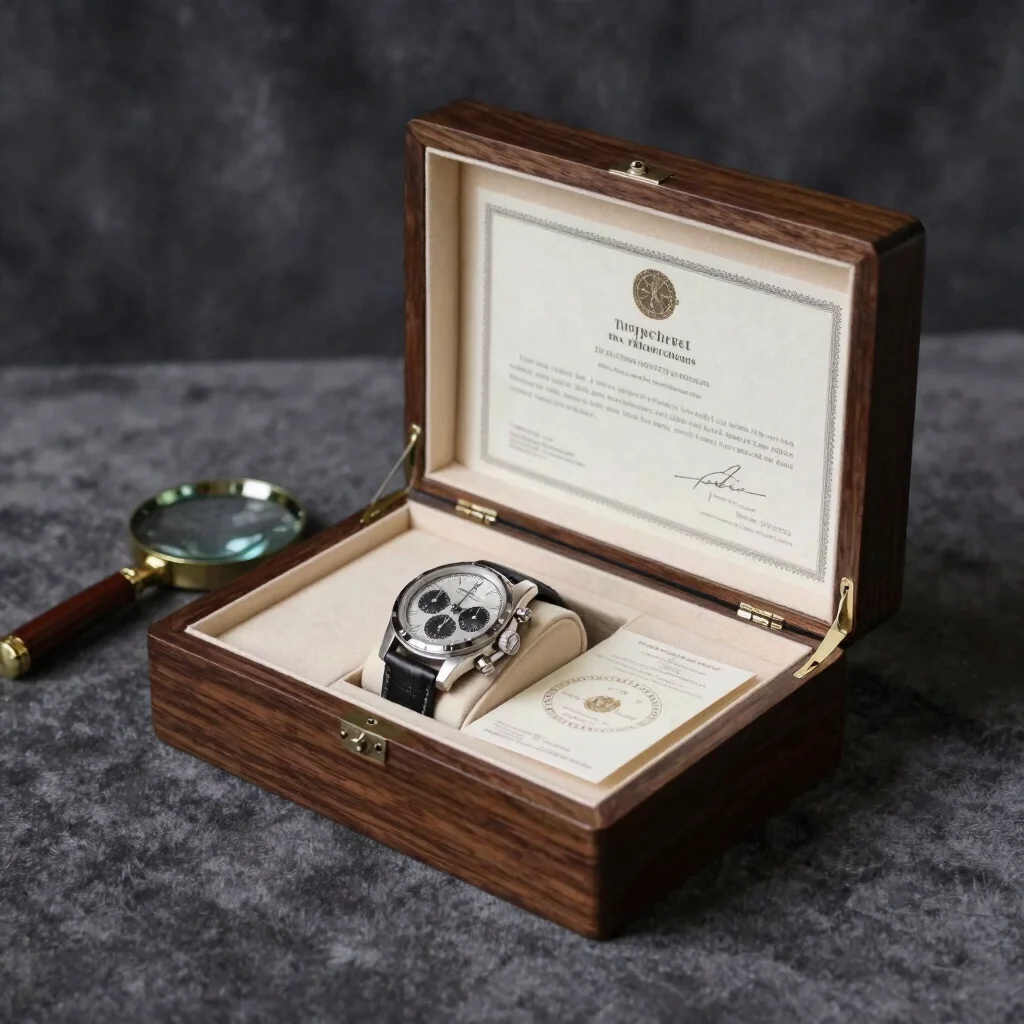
Original guarantee certificates, stamped warranty booklets, and period-correct presentation boxes significantly elevate market desirability. These original materials confirm the initial country of delivery, purchase date, and selling retailer details that cannot be replicated. Preserving these ephemera in climate-controlled environments prevents paper yellowing and ink degradation over decades.
Cross-Referencing Serials with Manufacture Archives
Leading heritage manufactures maintain ledger records detailing production dates, movement numbers, and case materials for historical references. Requesting an Extract from the Archives provides independent verification that the movement and case left the workshop together in its current configuration. Identifying correct caliber stamps and font profiles protects buyers from mismatched service parts or counterfeit assemblies.
Preserving Condition Without Compromising Originality
Over-polishing a vintage or neo-vintage case can erase sharp lug bevels and obscure deeply engraved serial numbers, irreversibly damaging collector value. Experienced horologists prioritize mechanical integrity and unpolished case geometry over superficial shine. Documenting every service interval with photographic evidence builds an unbroken chain of custody that commands respect across the global horological community.